


If you ask people if they would like to survive in a disaster situation, every one of them would tell you yes. But if you ask them how many of them are actually prepared, you'd learn that that's not true. Instead, you'd see maybe only a third of them (and that's being generous) are as thoroughly prepared as they say they are.
In this article, we'll discuss some common misconceptions about what's needed to prepare, and we'll talk about how money is not nearly as much of a roadblock as many think. We'll first discuss why you shouldn't rely only on the government. Then, we'll talk about how you shouldn't give up because you can't afford to buy everything at once. Finally, we'll offer suggestions for increasing your disaster prep budget.
1
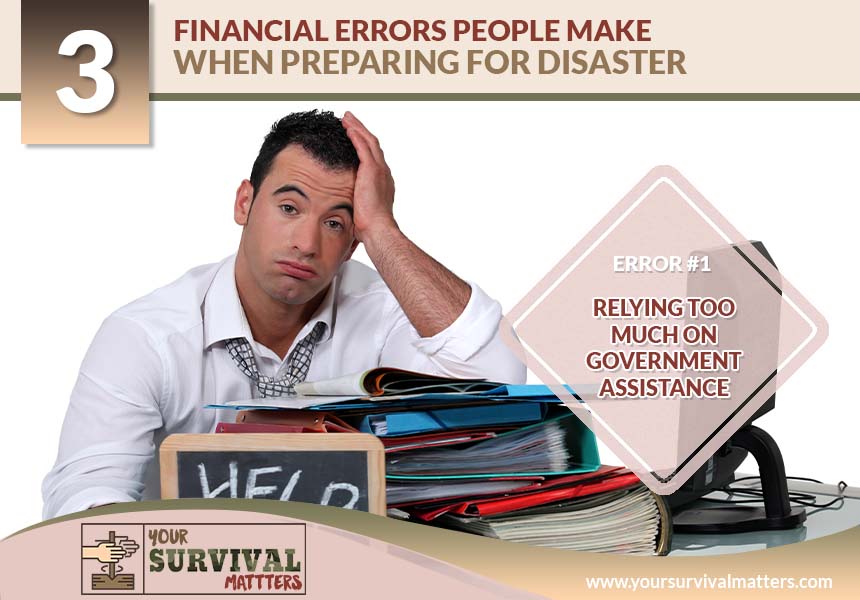
Relying Too Much On Government Assistance
While everyone wants to survive, not everyone will actually work a plan to make sure that happens. There are always a variety of reasons that people give for not preparing. Topping the list is always the excuse that putting a survival plan in action costs too much money. So they don't prepare. They believe that the government will step in and help them.
They fail to realize that the government isn't in the position to help people in the event that a disaster is catastrophic. Sure, the government can step in and help if an area or two is hit hard - but we saw how well that went in Katrina and other disasters. But imagine a disaster of such proportions that it astounds the entire world. If something, like an Ebola crisis, began to hit hundreds of thousands of people in every city and every state, the government wouldn't be able to keep up. If you weren't infected and had to stay quarantined in a place, you would become one of the millions. How well do you think your needs would be met?
2
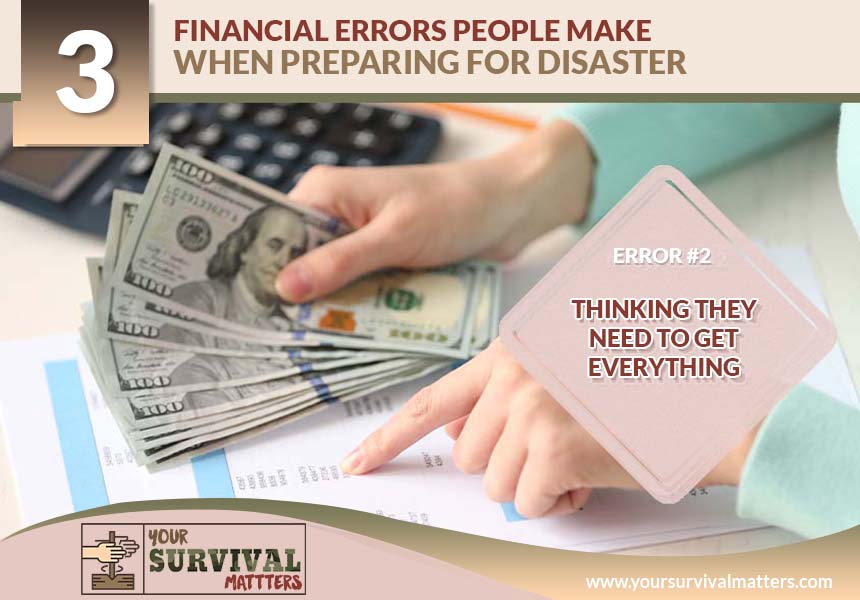
Thinking They Need To Get Everything At Once
You can't afford to rely on anyone else, and you can't afford to be not prepared. The problem that most people have when they use the excuse that they can't afford to gear up for survival is that their outlook is far too broad. They're looking at a list of supplies as a whole rather than breaking them down and concentrating on building up in small increments. You can set aside the supplies you need for survival even if you don't have all of the money you need at once because you can do it on a budget.
Even if you live paycheck to paycheck, you can afford to prepare. What you have to do is buy just a few survival supplies each month. As each month passes, your store of supplies will grow. Concentrate on reaching small goals first. For example, you can prepare for a 72-hour emergency first. So what you do is focus your money on buying just what you need for each member of your family to live for three days. Once you have those supplies, then you gradually increase what you have, such as preparing enough food for a week, and you slowly increase those supplies to make sure that you have enough for two weeks and so on.
3
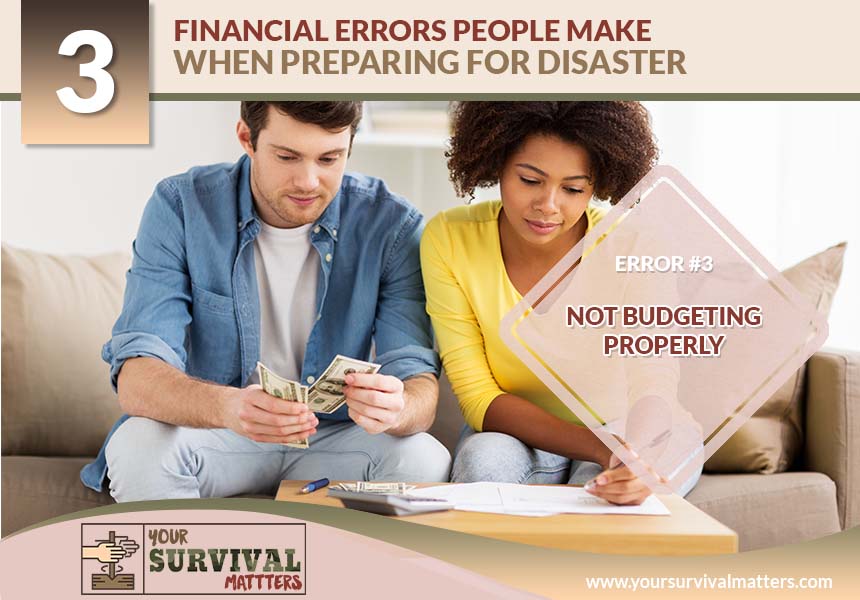
Not Budgeting Properly
There are always ways to add money to your budget. Try cutting out things that you don't absolutely have to have right now, at least until you get your supplies built up. Budget for everything, and don't waste money.
Use coupons. Buy one, get one free (BOGO) coupons are especially helpful. Always aim to get your food and supplies on sale. Sell some of the items that you have around your home that you don't need or no longer use and then put that extra money toward building up your supplies.
Now, we've covered some major misconceptions about the financial requirements of disaster prep. We first spoke of why you shouldn't rely only on the government. Then, we discussed how you shouldn't give up because you can't afford to buy everything at once. Then, we finished by offering suggestions for increasing your disaster prep budget.
Hopefully, this has given you a better idea of avoiding financial roadblocks when preparing for disaster. If you calmly assess your situation, you'll find you aren't nearly as hopeless as you might have thought. Now, you can be part of that shockingly small margin of people truly prepared for disasters.
Tags: increasing your disaster prep budget; avoiding financial roadblocks during disasters; suggestions for increasing your disaster prep budget; misconceptions about the financial requirements of disaster prep
.png)
.png)
.png)
.png)
.png)