
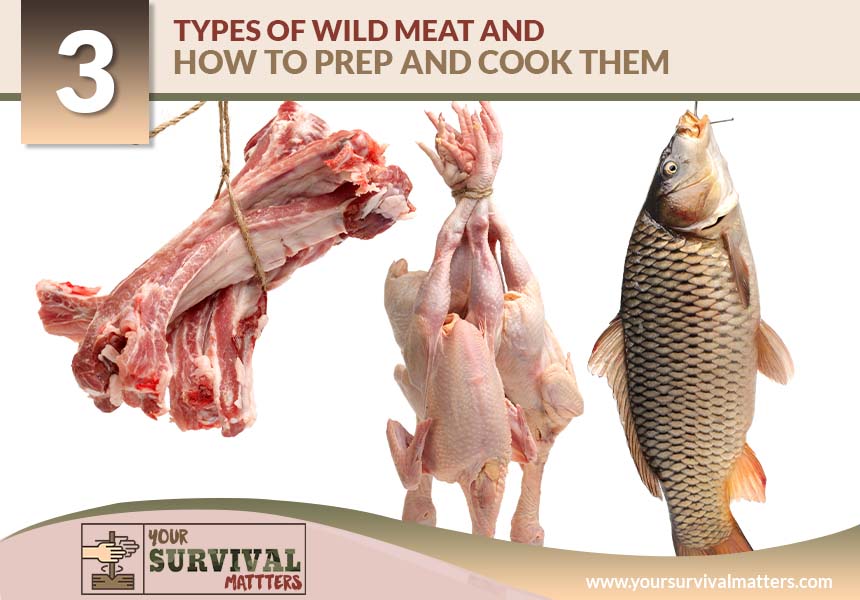


You need to know what to do about food when you're in the wild. This basic necessity of survival will require you to learn how to prepare your food as well as how to cook it. You'll need to learn how to spot food that's spoiled - both before and after cooking it. You have to cook your food thoroughly to avoid eating undercooked foods that can make you sick with bacteria or parasites. Not thoroughly cooking food in the wild can be deadly in some cases.
In this article, we'll discuss how to prepare and cook different common types of wild meat safely. First, we'll discuss the warning signs and preparation for safely eating fish. Then, we'll cover how to prepare birds. And finally, we'll talk about how to prepare larger animals like mammals.
1
Fish
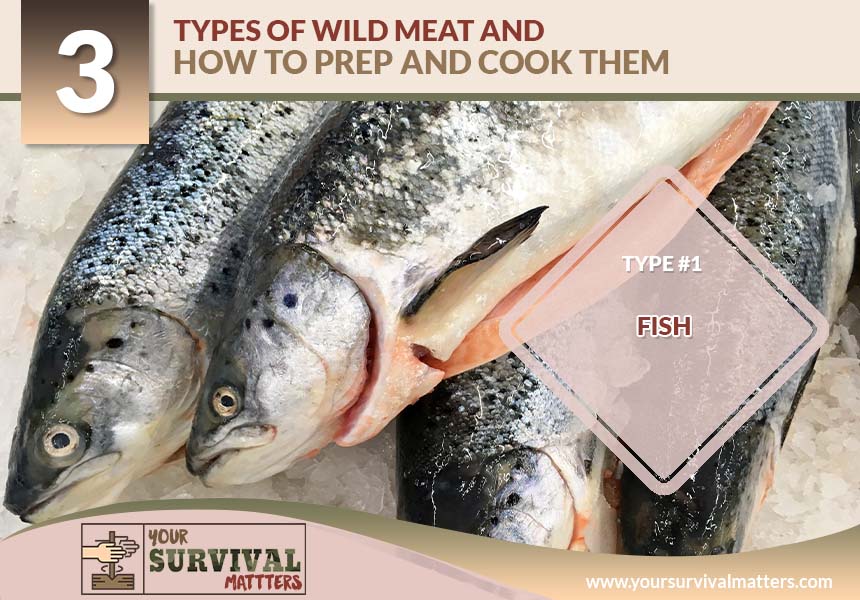
Many people turn to fish as a source of food in the wild. While fish is good, it doesn't have a lot of fatty meat on it, which is something that you need. Fish has sure warning signs when it's spoiled. First is the smell, but if it doesn't have an odor, that doesn't mean it's good to eat. If you push on the side of a fish and the indention you make doesn't spring back out, that's a sign the fish is spoiled. Slimy fish should never be eaten.
To prepare it for cooking, you need to clean it. Hold it up and scrape the scales off. Wash the fish, then gut the fish, and remove the entrails. Rewash the fish, then remove the head. Cook the fish in a pan or spear it and cook it directly over the fire. When the fish is ready, you'll be able to flake the meat off easily.
2
Birds
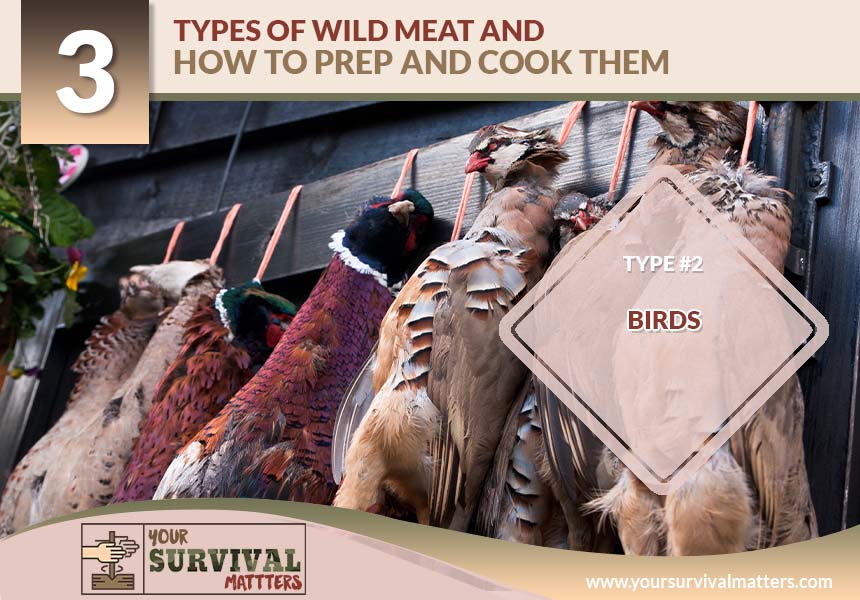
Birds can also be a good source of food. First, you'll want to remove the bird's feathers before skinning it. Then, after you skin it, take out the insides, such as the entrails, and then cut off the feet of the bird.
You can roast the bird over a fire using a stick you hold or the spit method. If it's a large bird, you'll want to truss it with twine to keep the meat from falling off into the fire as it gets done. Bird meat is done when the juices run clear at the fattest part of the bird.
3
Mammals
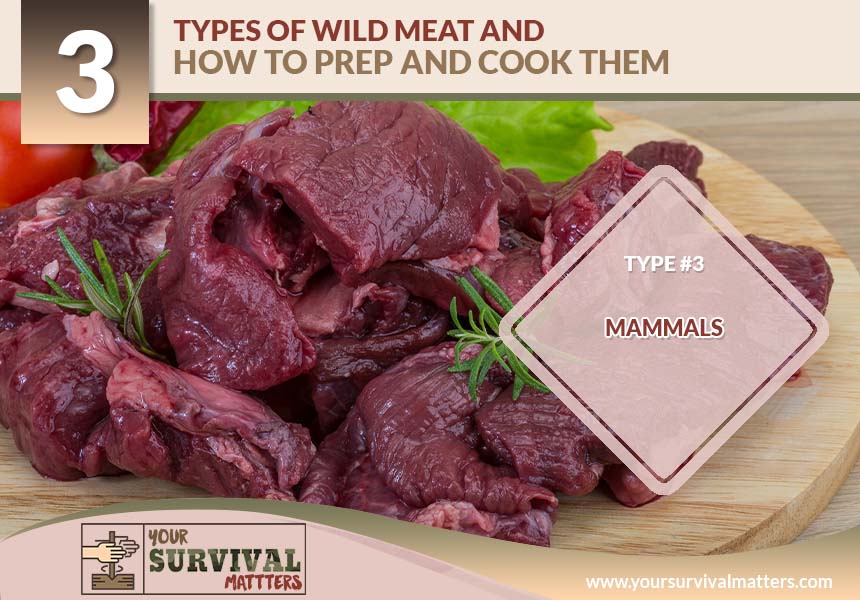
When you're preparing larger animals, such as mammals, for eating, you'll need to take off the hide, then remove the head and hooves or feet. Don't forget to remove the entrails. With larger animals, it can be challenging to make sure that all the meat is cooked safely enough to eat. This is why you want to cut the meat up into smaller sizes.
Animals, such as those listed above, can be cooked over an open fire, or you can use the meat to create meals, like soups in a pot. You can also boil the meat. The meat is thoroughly cooked when it's tender or shreds easily. How you cook the food will determine how long you should cook it until it's done. Many foods can also be cooked on a flat rock. You can also create a grill using pieces of thin metal or wire fencing if you find some in the wilderness. Building a stone oven to cook with is easy to do if you have the natural resources available.
Now, you have an idea of the different needs and preparation required for wild meat. We started by learning some warning signs and the preparation of fish. Then, we went over how to prepare birds. Finally, we wrapped up by discussing how to prepare larger animals, like mammals.
Cooking is one of the most fundamental skills necessary for survival. Learning to spot rotten or spoiled food and how to cook your food thoroughly is of the utmost importance. Not thoroughly cooking food in the wild can be deadly in some cases, so take this lesson to heart. Hopefully, you now have an even better idea of how to survive off the land.
.png)
.png)
.png)
.png)
.png)